How much of your weight is muscle, and how much is not
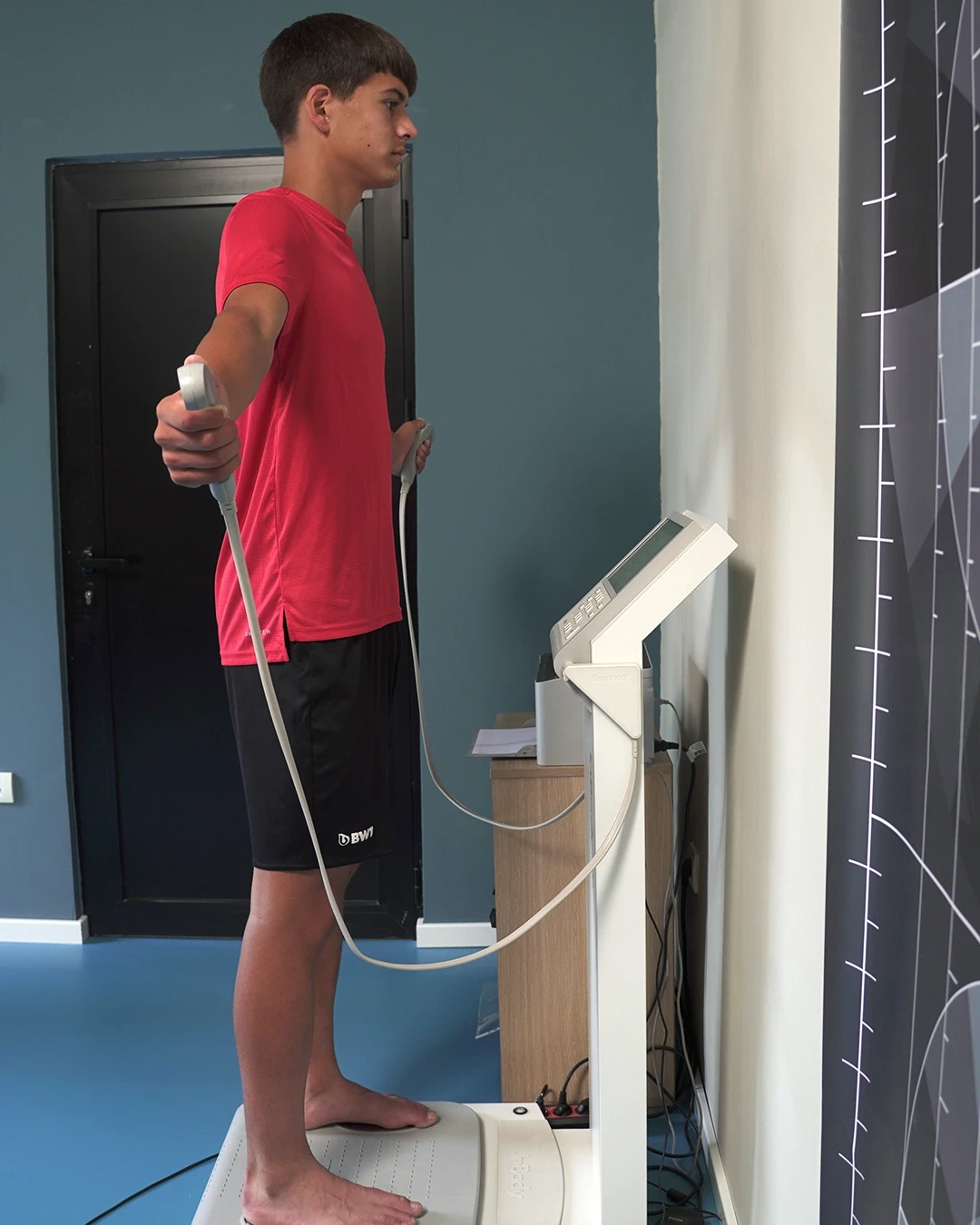
You step onto the device, and within a minute we can see how much muscle and fat you carry and how it is distributed across your body.
InBody 770
One 60-minute session on five measuring devices, from an InBody body composition measurement to posture and gait analysis. You leave with a written report and a proposal for an individual training programme.
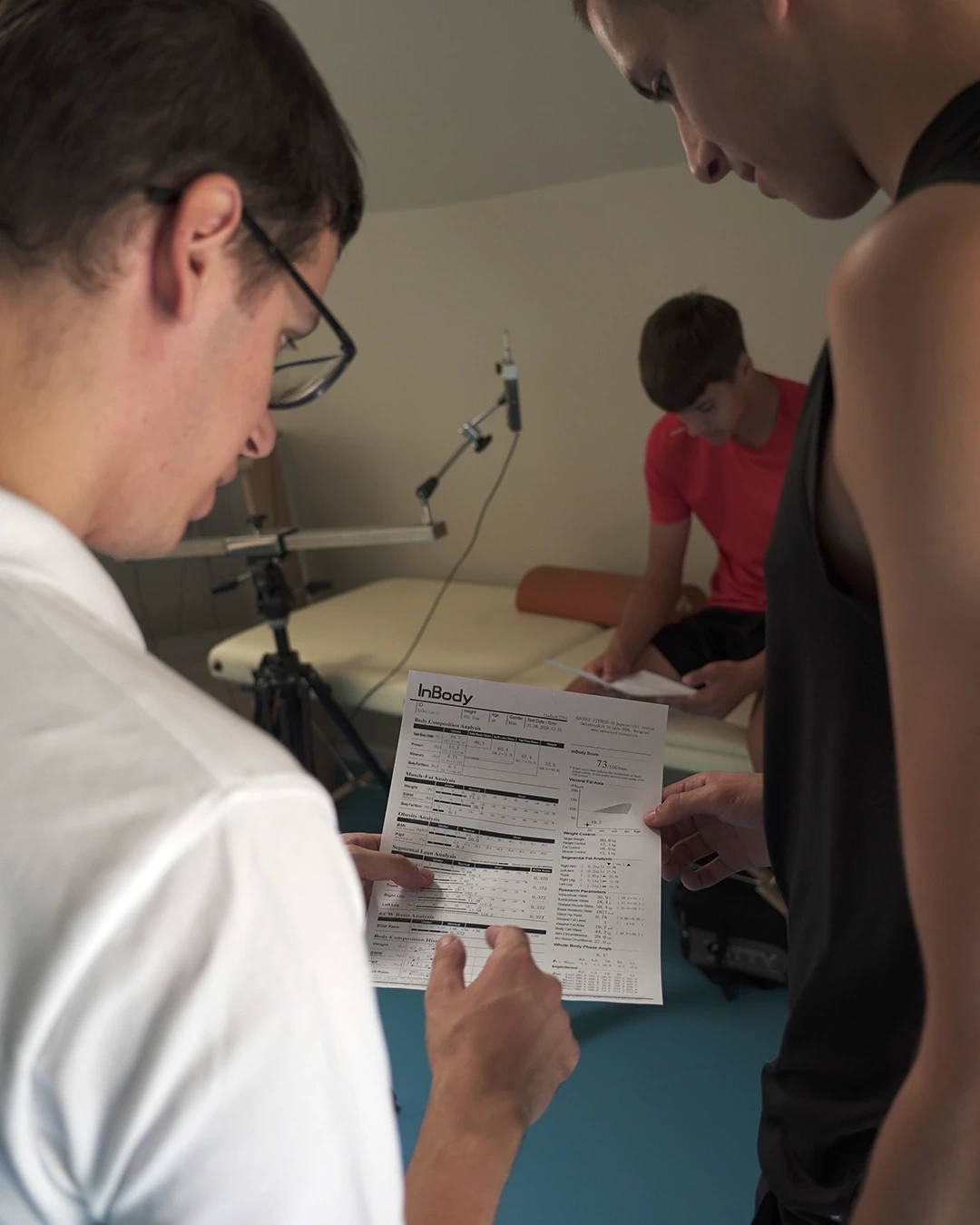
You step onto the device, and within a minute we can see how much muscle and fat you carry and how it is distributed across your body.
InBody 770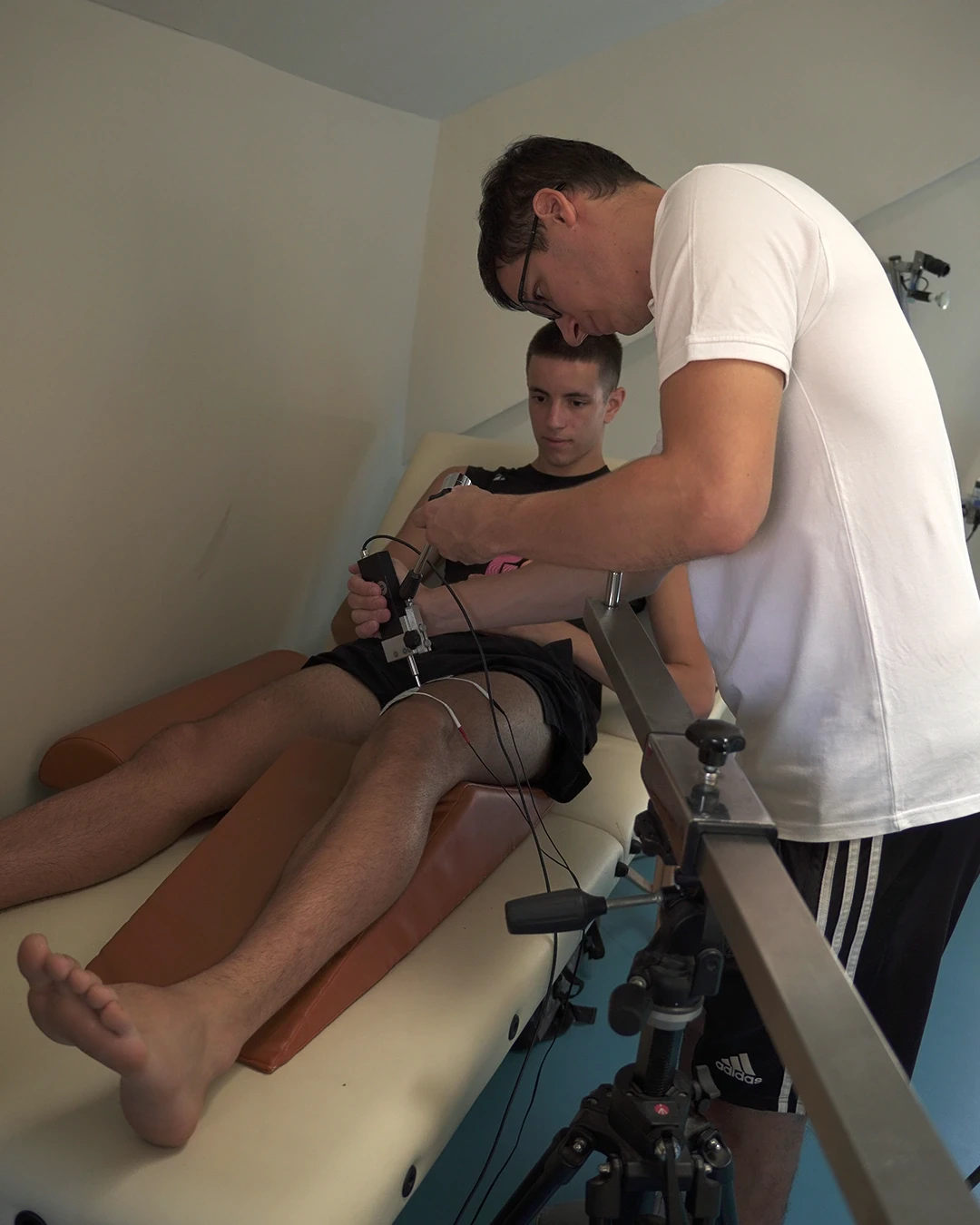
You stay relaxed, lying down or seated, while a sensor records how each muscle responds to a brief impulse. This shows exactly which muscle is not keeping up with its counterpart on the other side.
Tensiomyography (TMG)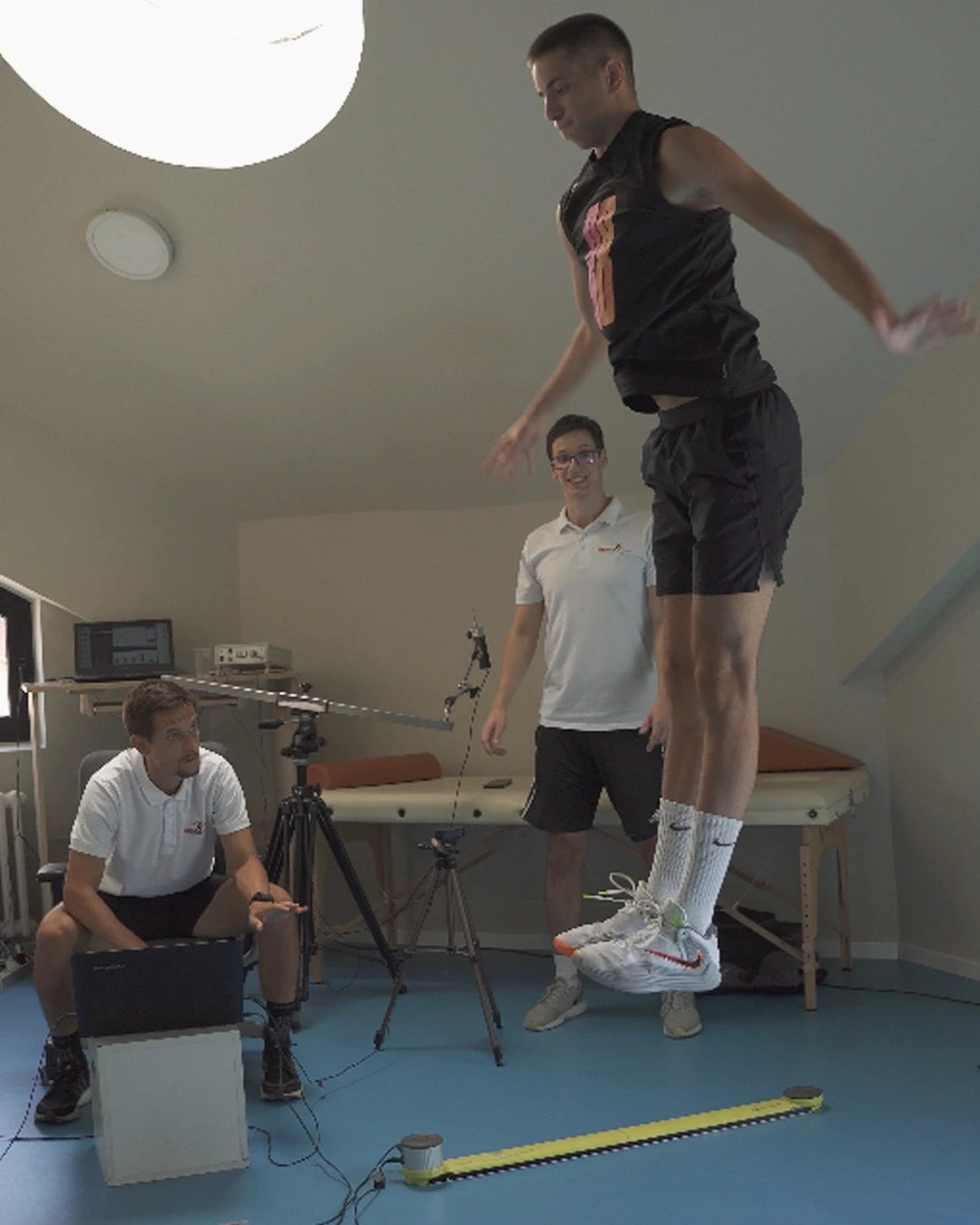
A series of jumps between optical bars. Every take-off and landing is measured in milliseconds, so the difference between your left and right leg shows up clearly in the numbers.
Optojump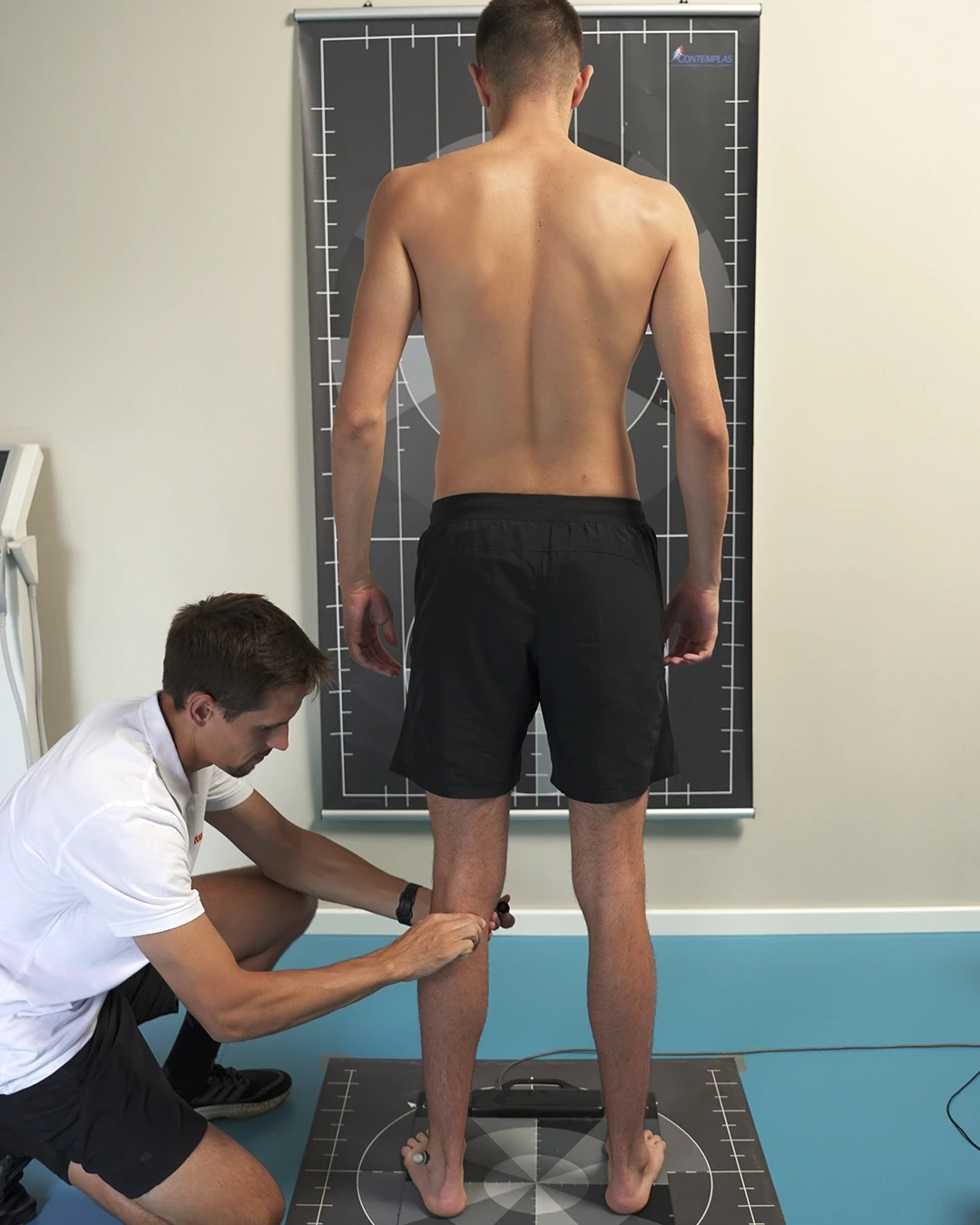
Cameras record your posture and gait from several angles. The footage shows where a shoulder drops, a hip lifts or your weight shifts to one side.
Contemplas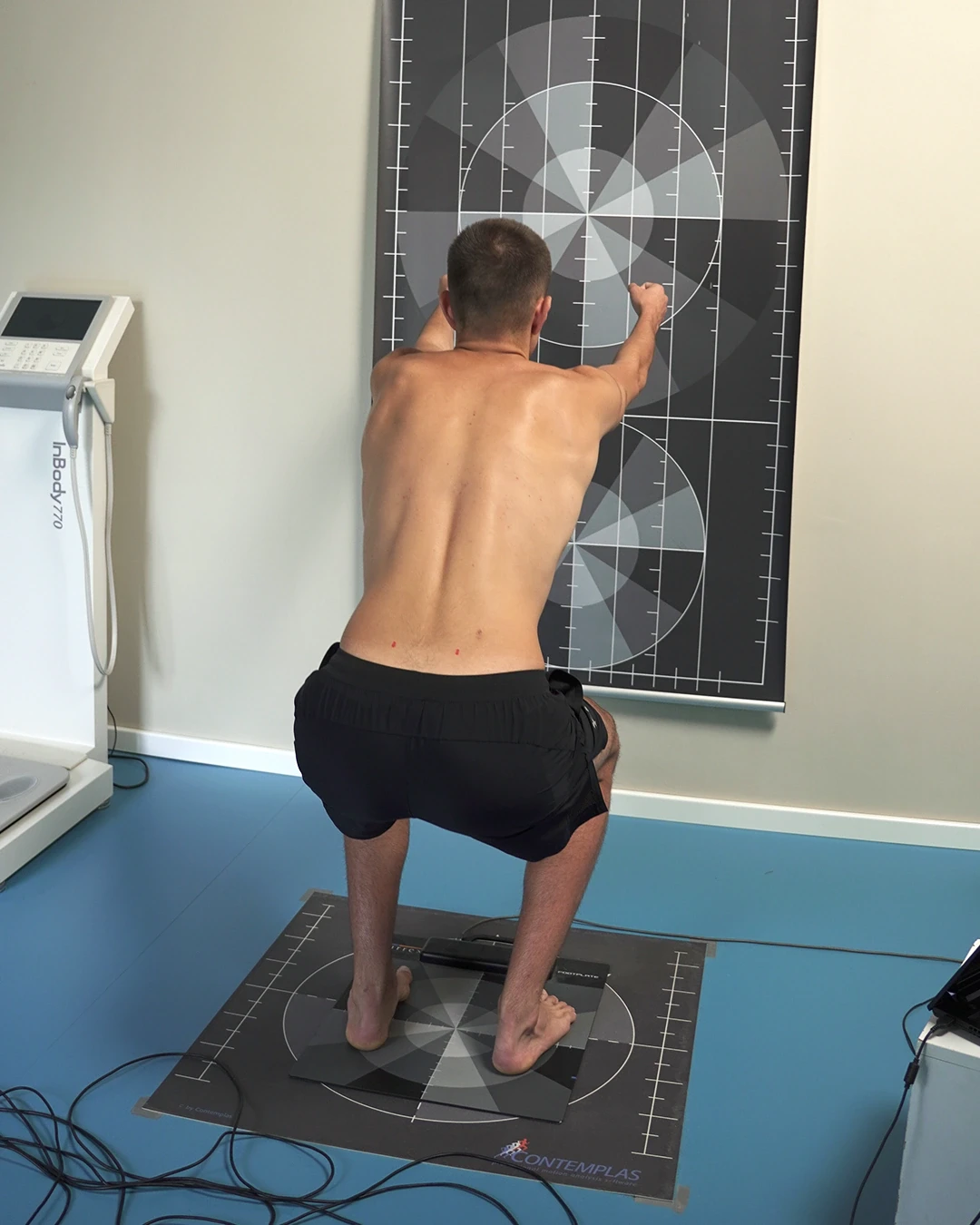
You take a few steps across a sensor plate that records how your foot carries your weight, standing still and in motion.
CurrexYou step onto the device, and within a minute we can see how much muscle and fat you carry and how it is distributed across your body.
InBody 770You stay relaxed, lying down or seated, while a sensor records how each muscle responds to a brief impulse. This shows exactly which muscle is not keeping up with its counterpart on the other side.
Tensiomyography (TMG)A series of jumps between optical bars. Every take-off and landing is measured in milliseconds, so the difference between your left and right leg shows up clearly in the numbers.
OptojumpCameras record your posture and gait from several angles. The footage shows where a shoulder drops, a hip lifts or your weight shifts to one side.
ContemplasYou take a few steps across a sensor plate that records how your foot carries your weight, standing still and in motion.
CurrexTesting shows where you are starting from, where your left and right side differ and which limitation needs to be addressed first. The same tests are repeated over time, so you can see your progress in numbers.
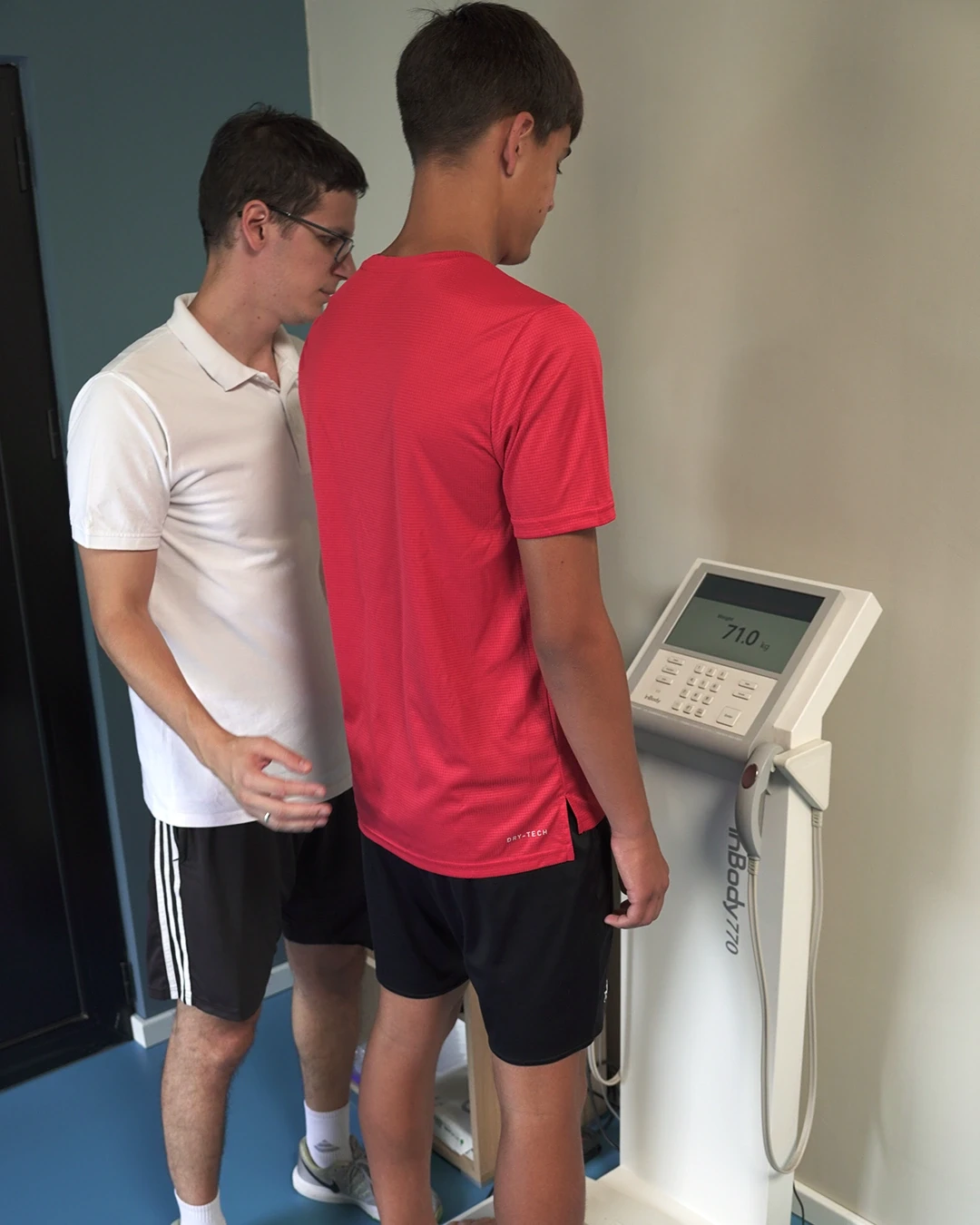
A weak current at several frequencies passes through the body and measures five segments separately, both arms, the trunk and both legs. You get muscle mass, fat mass, body fat percentage, total body water and how your muscle is distributed by segment. We also measure visceral fat, the fat that sits around the internal organs and gives the most accurate picture of your diet.
The report shows whether a kilogram you have gained or lost is muscle or fat, and whether there is a difference between your left and right side.
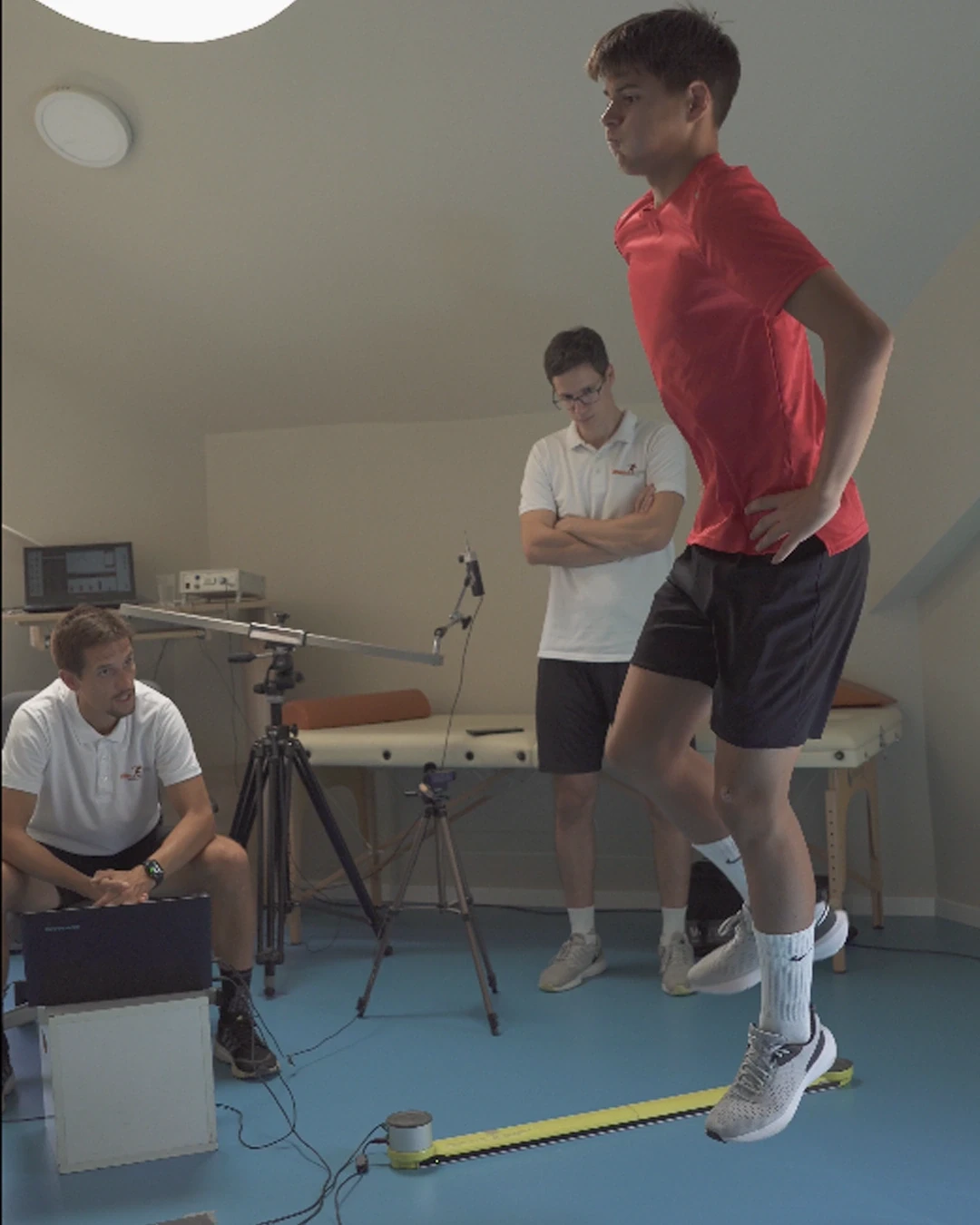
We measure jumping and running with a high-precision optical system. It gives us jump height, ground contact time, flight time, power per kilogram of body weight, step length and frequency, and strength endurance. Cameras film each jump alongside the measurement, so we also analyse the biomechanics of the movement and the position of the ankle, knee and hip under dynamic load.
After the test we know how you move under load and whether you lack strength or explosive power. These are two different qualities, and each needs a different training plan.
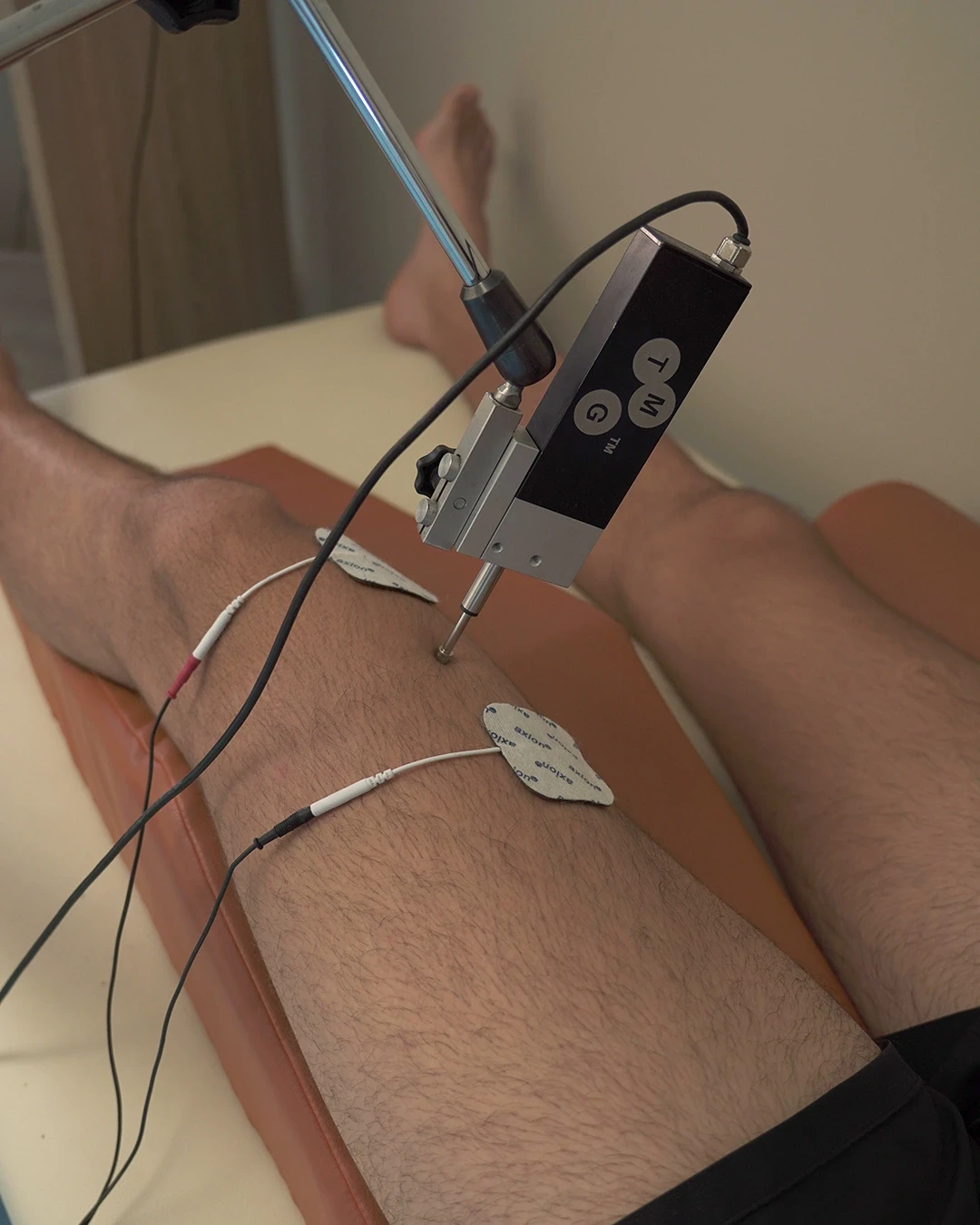
A sensor is placed on the muscle, a brief electrical impulse makes it contract, and the device records the response. The first value is how fast the muscle reacts, and the second is its maximum displacement, which tells us about muscle tone. This shows whether the tone is optimal, whether the muscle lacks tone and needs more strengthening, or whether it is in spasm and needs more relaxation.
We look at differences between the left and right side, and also at how the muscles of the same leg relate to each other around the knee, hip and ankle. That tells us how to approach your muscles and how to train them.
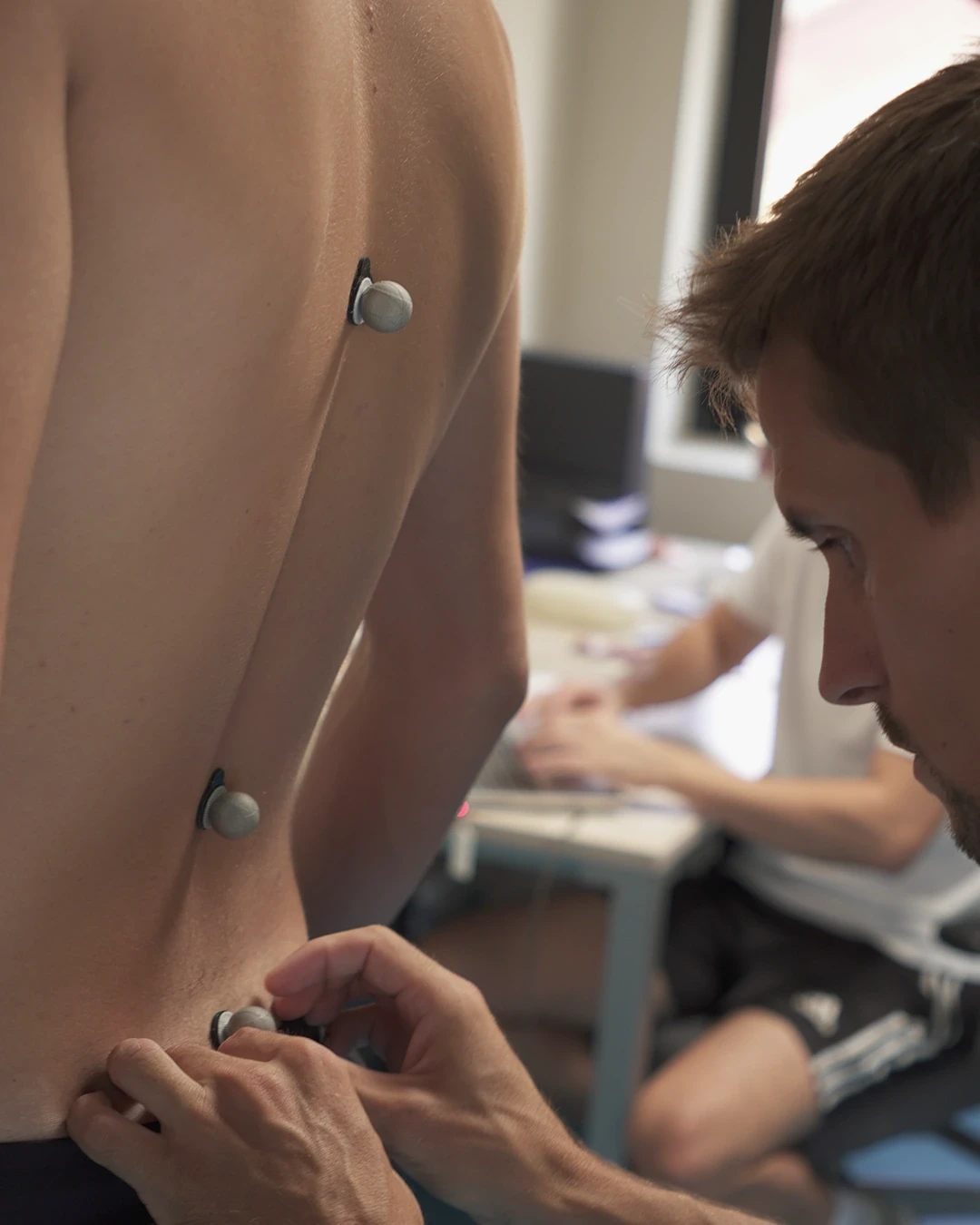
We assess the position of the body from anthropometric landmarks, the level of the shoulders, hips, knees and ankles. We also measure the cervical, thoracic and lumbar curves relative to the vertical plane, which allows us to assess deformities such as kyphosis, scoliosis, hyperlordosis and hypolordosis.
The aim is to establish whether this is a postural asymmetry or a potentially structural problem, because the two are treated differently.
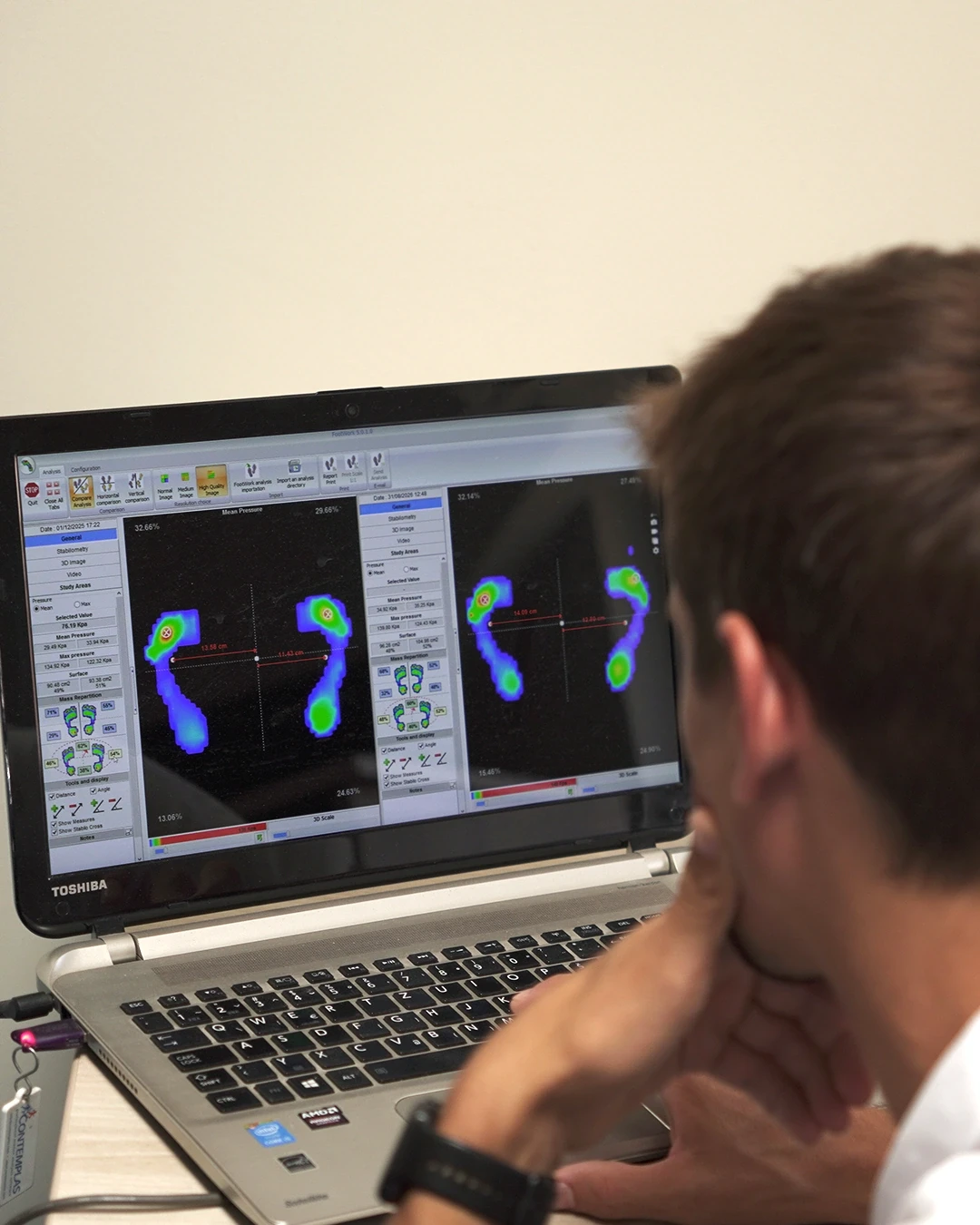
We record your footprint and get an accurate picture of how your foot is shaped and how it works. It shows where the pressure is highest when you stand and where it moves when you are in motion, whether the parts of the foot that should carry the most load are doing so, and whether your weight is shifted towards the front or the back of the foot, or towards the left or right leg.
From this we assess how you use your foot as the base of every step, jump and landing, because a fault at that level travels upwards to the knee, the hip and the spine.
The whole session lasts 60 minutes and is led by a coach.
Your sport, training volume and injury history decide where the measurements focus.
Measured on the InBody 770, standing and without any effort.
TMG sensors measure one muscle at a time, lying down and seated.
Contemplas cameras. The footage is kept as a reference for the retest.
Optojump and Currex. The only part that takes any effort.
The report stays with you even if you do not continue with us.
The report describes what was measured, and any condition is named by a doctor.
Testing does not replace a medical examination or a medical certificate for your club.
A measured asymmetry describes load and makes no forecast.
Results are measured at the retest after three months.
No. None of the measurements is invasive, and the only part that takes effort is the series of jumps.
We work with children and young athletes aged 10 to 20 who already train in a sport. The testing is painless and involves no weightlifting.
Children and young athletesIf the pain keeps coming back, lasts or started after an injury, the first step is a paediatrician or a sports medicine doctor. Once the child has been examined, testing shows how the load is distributed.
After an injury, a difference between the two sides can remain even once the pain has gone. Measuring the jump and the muscle response shows how large that difference is, and the decision to return to full training is made by a doctor.
The report is designed to guide a training plan. Body composition is one of the five measurements and is not a weight loss programme on its own.
No. Testing is a separate service, and the report is yours to keep either way.
We carry out complete testing for teams, with a report for each player. A team session is arranged by phone.
Professional athletesComplete testing is paid once and covers the whole session. We use the same set of measurements when we test professional teams, with a report for each player.

With your permission, we measure visits to this website with Google Analytics and show a map of the centre. Both Google services set cookies when they load.
Without it the website works the same, only without measurement and without the map. You can read more in our privacy policy.