If you have a herniated disc, we work with you once your treatment is complete, with the report and opinion of the doctor who leads your case. Before the first session we measure how your body currently handles load, and the plan is built on what we measure.
What we do is training and functional work, in cooperation with your own doctor. Every session is one-to-one and led by a coach, at the centre in New Belgrade.
A herniated disc is a condition in which part of the disc between two vertebrae moves out of its normal position and presses on the surrounding structures, most often a nerve root. Also called a slipped disc, it occurs mostly in the lower back, and pain that spreads down the leg is often called sciatica.
The same scan result does not look the same in two different people once they move. That is why, before we make a plan, we measure how your body stands, how it carries its weight and how your muscles respond.
Posture and the curves of the spine
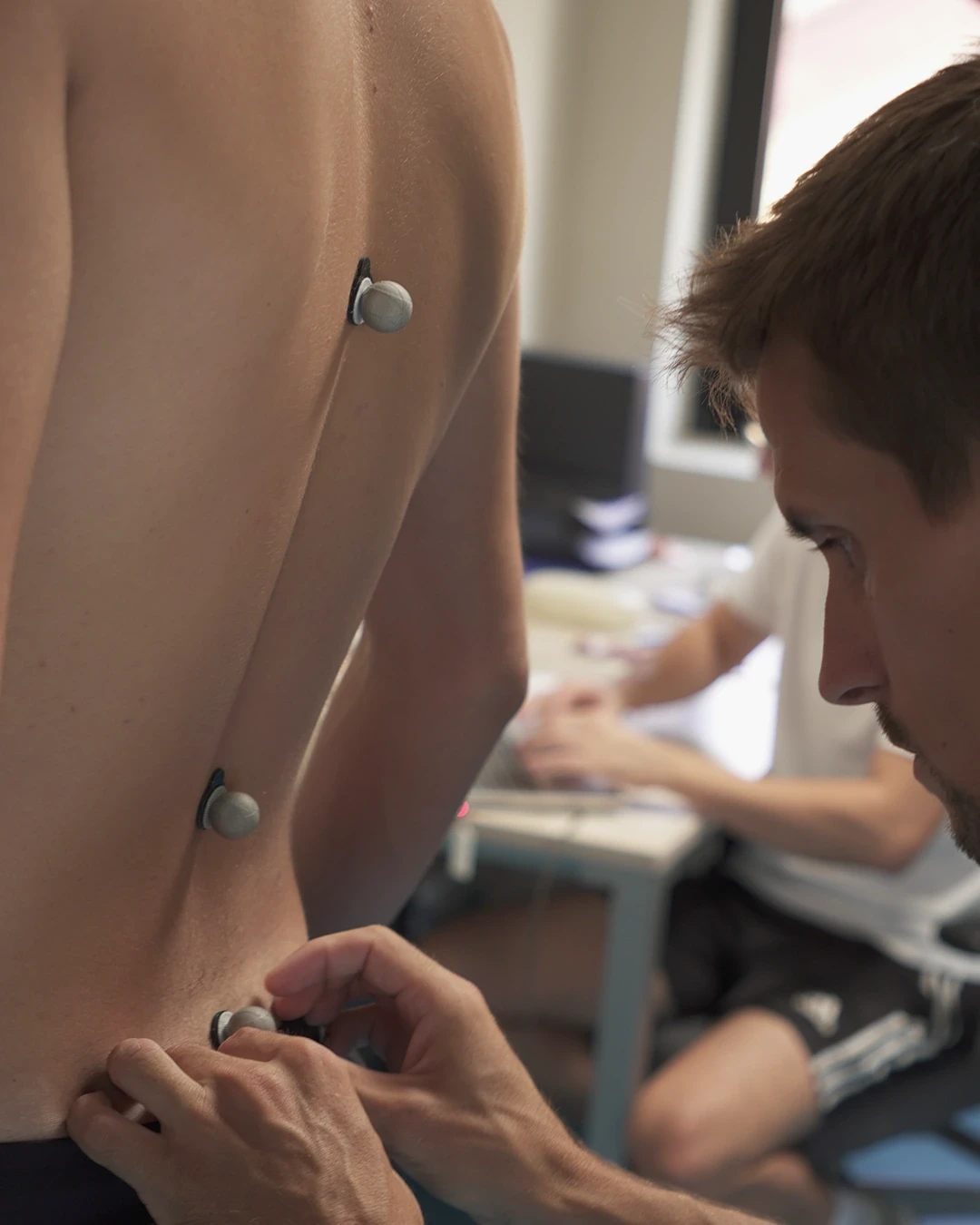
Contemplas · posture analysis
We film how you stand and measure the level of your shoulders and hips and how the curves of your neck, upper back and lower back relate to each other.
We see whether a difference in posture is postural or potentially structural, because training handles those two conditions differently.
How your feet carry your weight
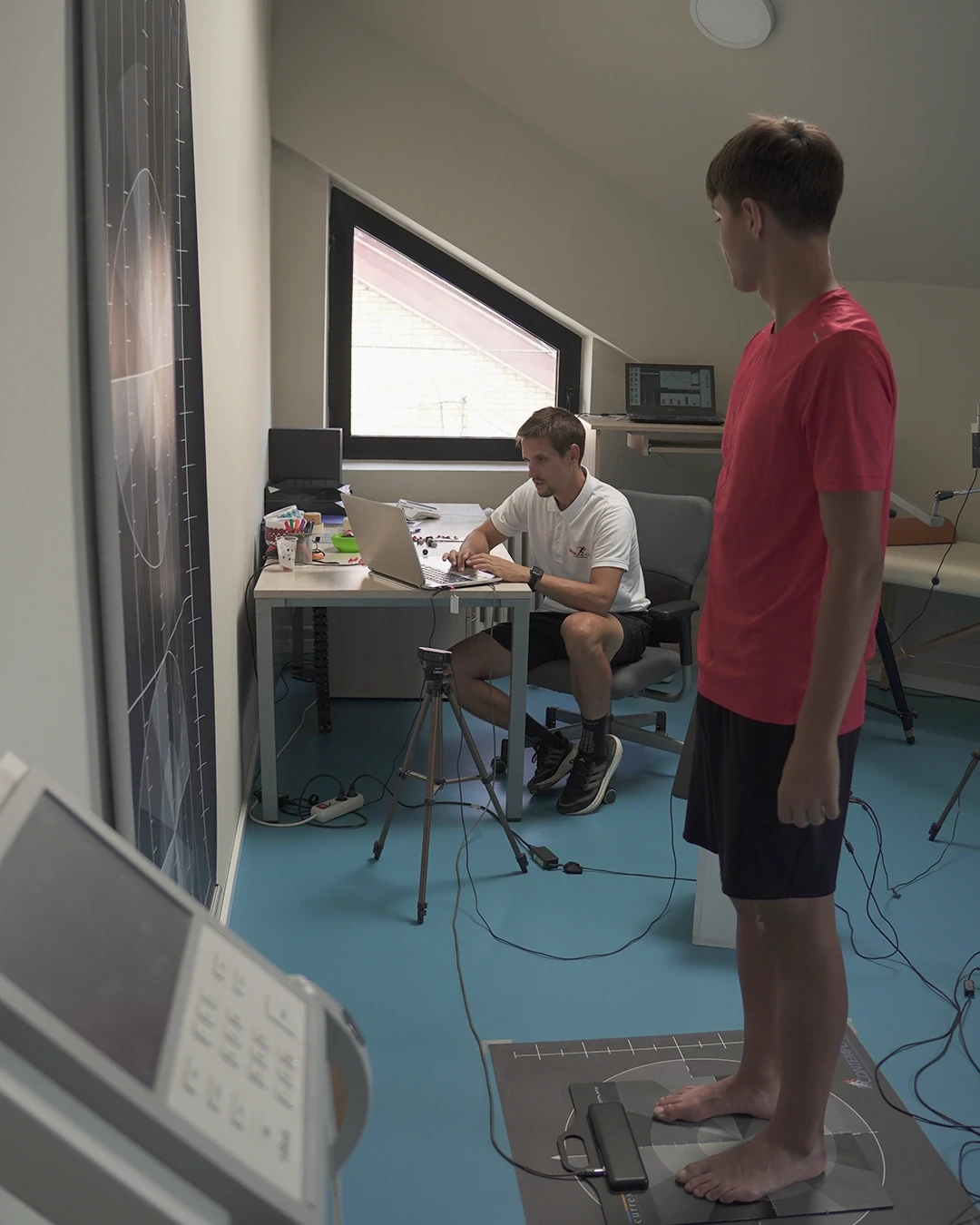
Currex · foot pressure analysis
We record your footprint and how pressure is distributed under your feet while you stand and while you move.
We see whether your weight shifts onto one leg. A problem in how the feet carry the load travels upwards, to the knee, the hip and the spine.
Muscle response on the left and right side
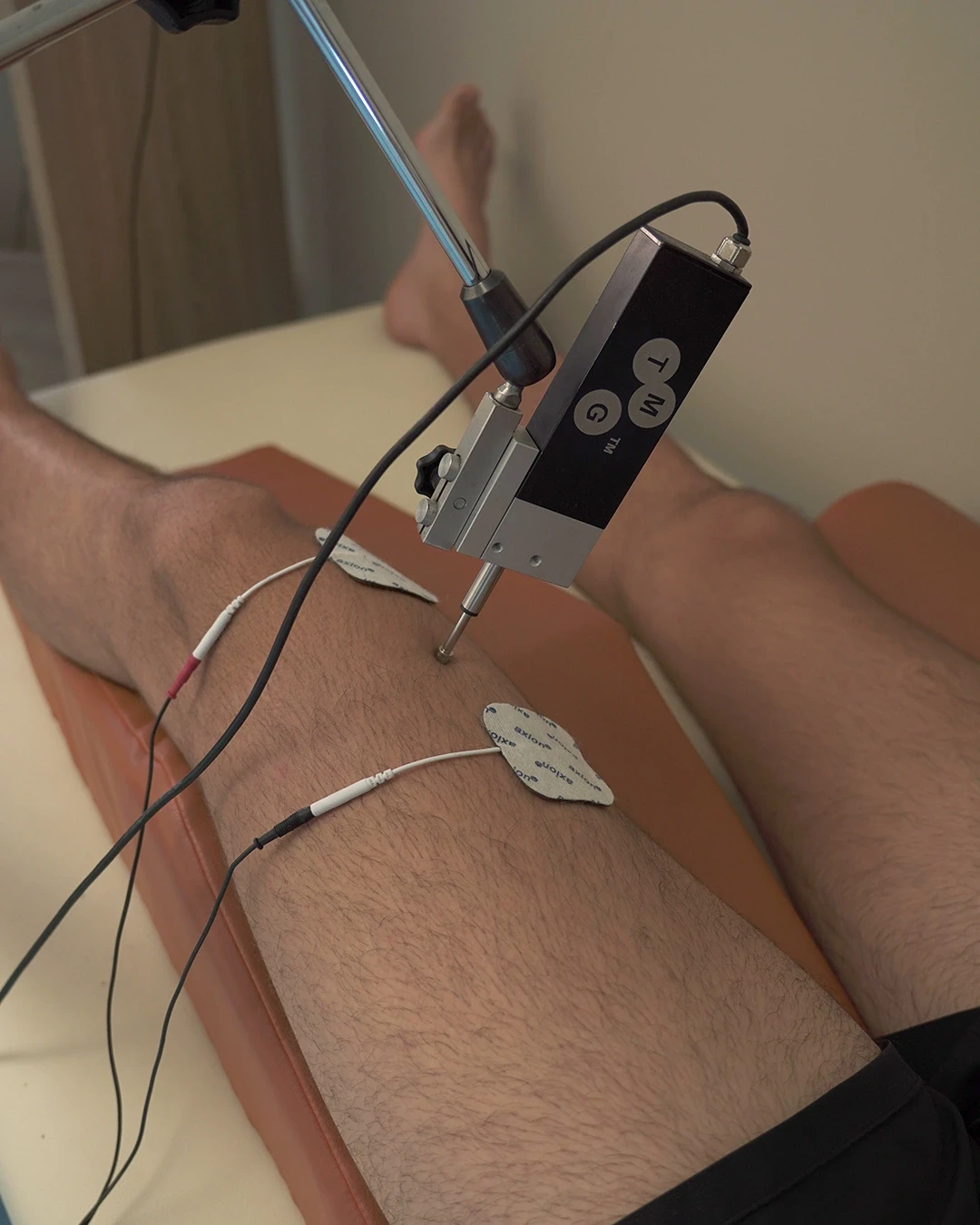
TMG · tensiomyography
A sensor on the muscle records how quickly it responds and what its tone is. The measurement takes no effort from you.
We see which muscle is in spasm and which one lags behind its pair. With pain that spreads down the leg, that is a difference the naked eye cannot see.
Body composition by segment
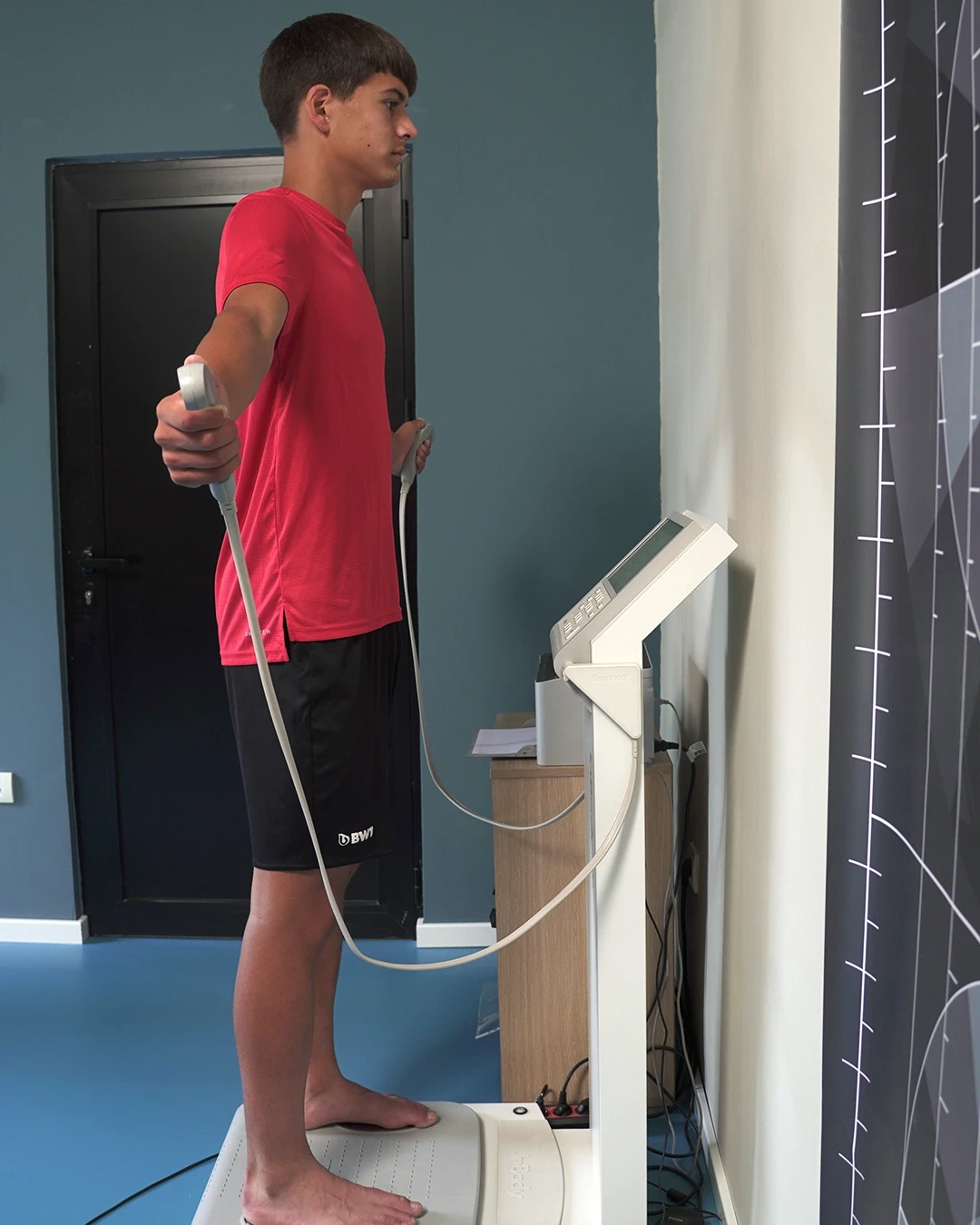
InBody 770
We measure muscle mass and fat mass separately for each arm, the trunk and each leg.
We know how much muscle there is in your trunk and legs and whether your left and right sides differ, so it is clear where the plan starts from.
When training is the right step
Training comes after you have seen your doctor. These are the situations in which people with a herniated disc most often get in touch with us.
Your treatment is over, but your back does not tolerate load
Your doctor has given the go-ahead to move, but you do not know how much to do or what to start with. The measurement shows where training begins.
The pain comes back after sitting or lifting
Once your doctor has had their say, the plan is built around the movements you need every day, in the order your body accepts them.
You have not trained since the herniated disc was diagnosed
If your doctor has given the go-ahead to move, training comes back gradually, with constant checks on how your body responds.
An athlete returning to the season
The return goes in phases, from controlling the load to the movements the athlete has to perform in their sport.
1Before the first sessionYour doctor’s report and opinion
Get in touch with the report and opinion of the doctor who leads your case, so that we know our starting point before the test.
2First sessionThe test
It takes 60 minutes. None of the measurements is invasive.
3After the reportPlan and load control
The plan is built on what we measured and on which movements provoke pain and which do not. The load increases only once your body handles it without discomfort.
4Every three monthsRetest
The same tests, under the same conditions. The numbers show how your tolerance to load is changing, and the plan is adjusted accordingly.
An amazing place to train! The coaches are dedicated, and truly know what they’re doing. They pay attention to every move, adjust the workouts to your current condition, and always motivate you to push forward — but never beyond your limits. Thanks to their approach and attention to detail, they helped relieve my herniated disc pain and got me back in shape like I haven’t been in years! Highly recommended!
AMAnna MarcoGoogle review
Common questions about herniated discs
How can I tell whether my pain comes from a herniated disc
Only a doctor can establish that, based on an examination and a scan. Lower back pain has several possible causes, and we do not make diagnoses.
Can I train at all with a herniated disc
You can, as long as training does not make your condition worse, and you do not need special permission from your doctor for that. You agree the amount of work and the timing of your follow-up check with your coach.
Will you give me exercises for a herniated disc
There is no list of exercises that suits every herniated disc. The plan is made after the measurement, according to which movements provoke your pain and which do not.
Weights become part of the plan once the measurement shows that your body can handle the load. You start with a light load, which increases gradually under a coach’s supervision.
How long does the return take
It depends on the condition and on how long you have had it. No timeframe is promised in advance, and progress is tracked through repeated measurement.
Is this the same as physiotherapy
No. What we do is training, in the gym, with a load that is measured and dosed.
It starts with measurement
The first step is the test, together with your doctor’s report and opinion. After one session you know where you are starting from and what the plan looks like for the next three months.
With your permission, we measure visits to this website with Google Analytics and show a map of the centre. Both Google services set cookies when they load.
Without it the website works the same, only without measurement and without the map. You can read more in our privacy policy.