Skip to content

Training for recreational athletes

One-to-one training in New Belgrade for people who are active but do not compete professionally. We work with people who want to get fitter, people preparing for a race and people whose pain gets in the way of everyday life.

The plan is built around your goal, your current condition and the time you can realistically give to training.

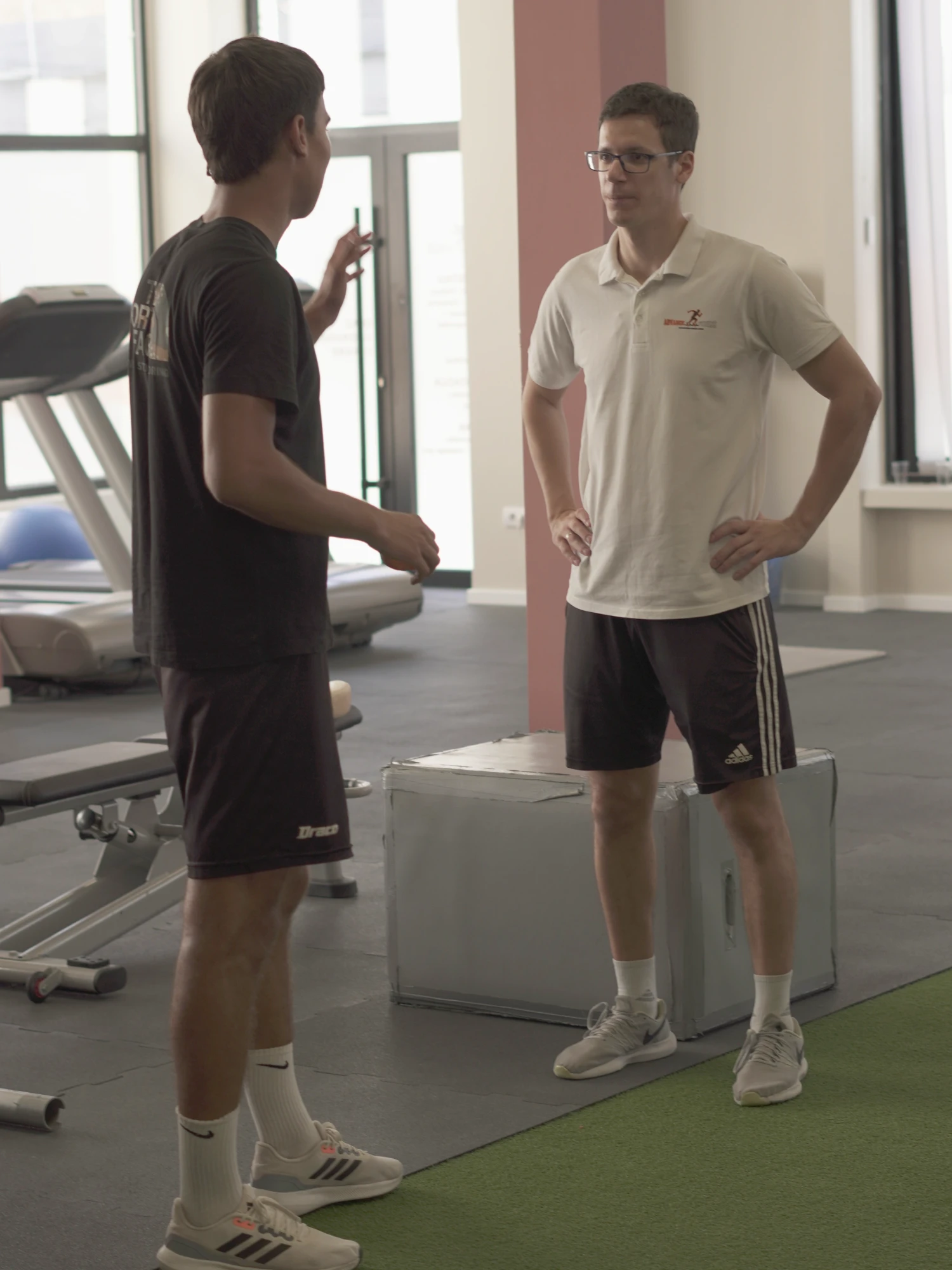
An Advance Fitness Centar coach talking with a client in the training room in New Belgrade, next to the jump boxes and the artificial turf track.

Who we work with

These are the four reasons recreational athletes most often get in touch. Each programme is built separately, and the starting point is always the same.

Race preparation

First race · half marathon · marathon · trail

We work on the strength and stability that running demands, with a plan that fits your schedule and the distance you already run each week.

The aim is for you to reach the start line healthy and run the race at the pace you prepared for.
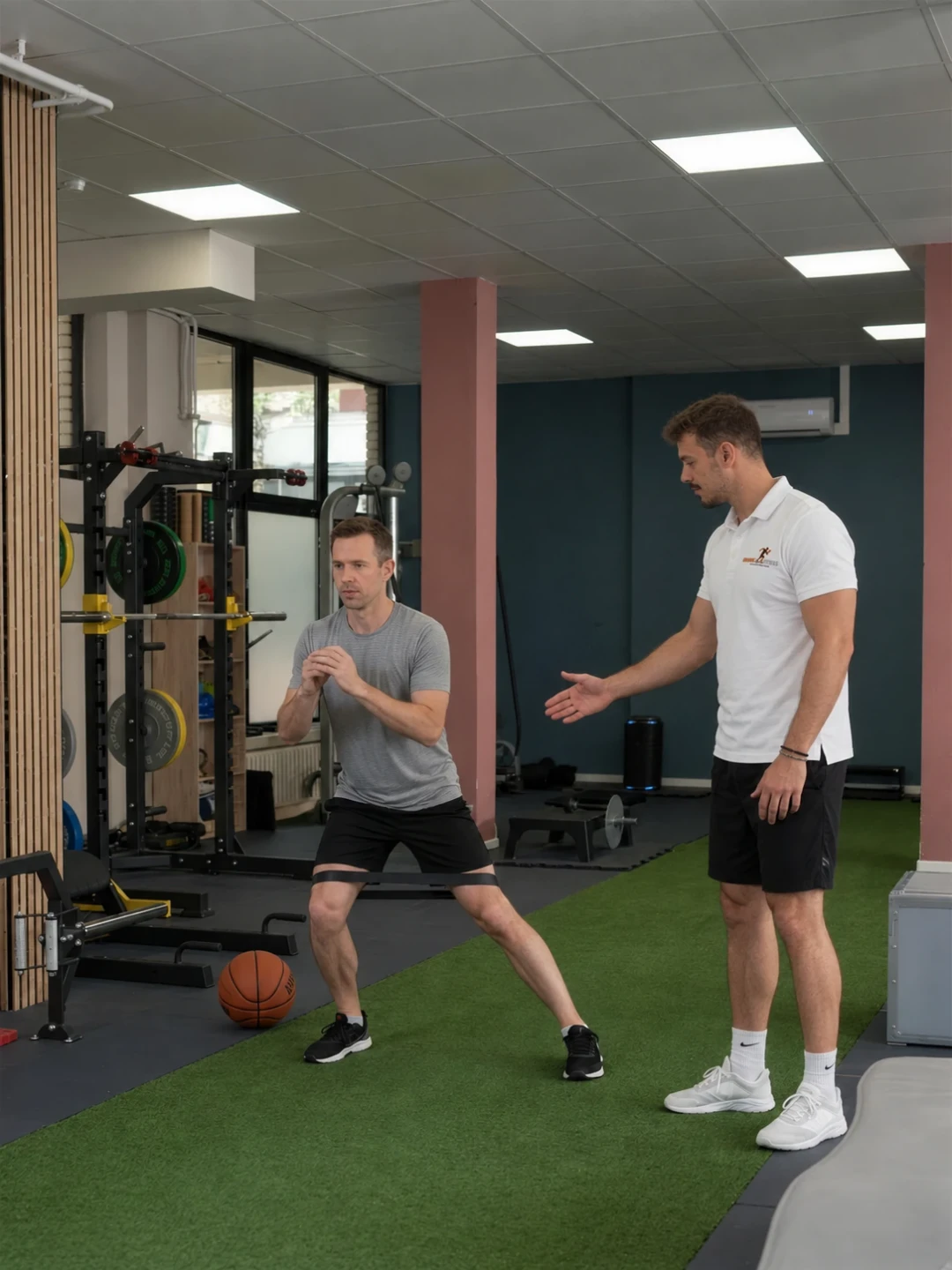
A recreational basketball player does a lateral lunge with a resistance band around his thighs while a coach beside him guides the movement with his hand.

Recreational sport

Basketball · tennis · football · once or twice a week

Recreational players often play at an intensity their body is not prepared for, which is why pain and injuries tend to show up after a match.

We work on the strength, mobility and fitness that your sport demands, so that you can play the whole season without having to take time out.

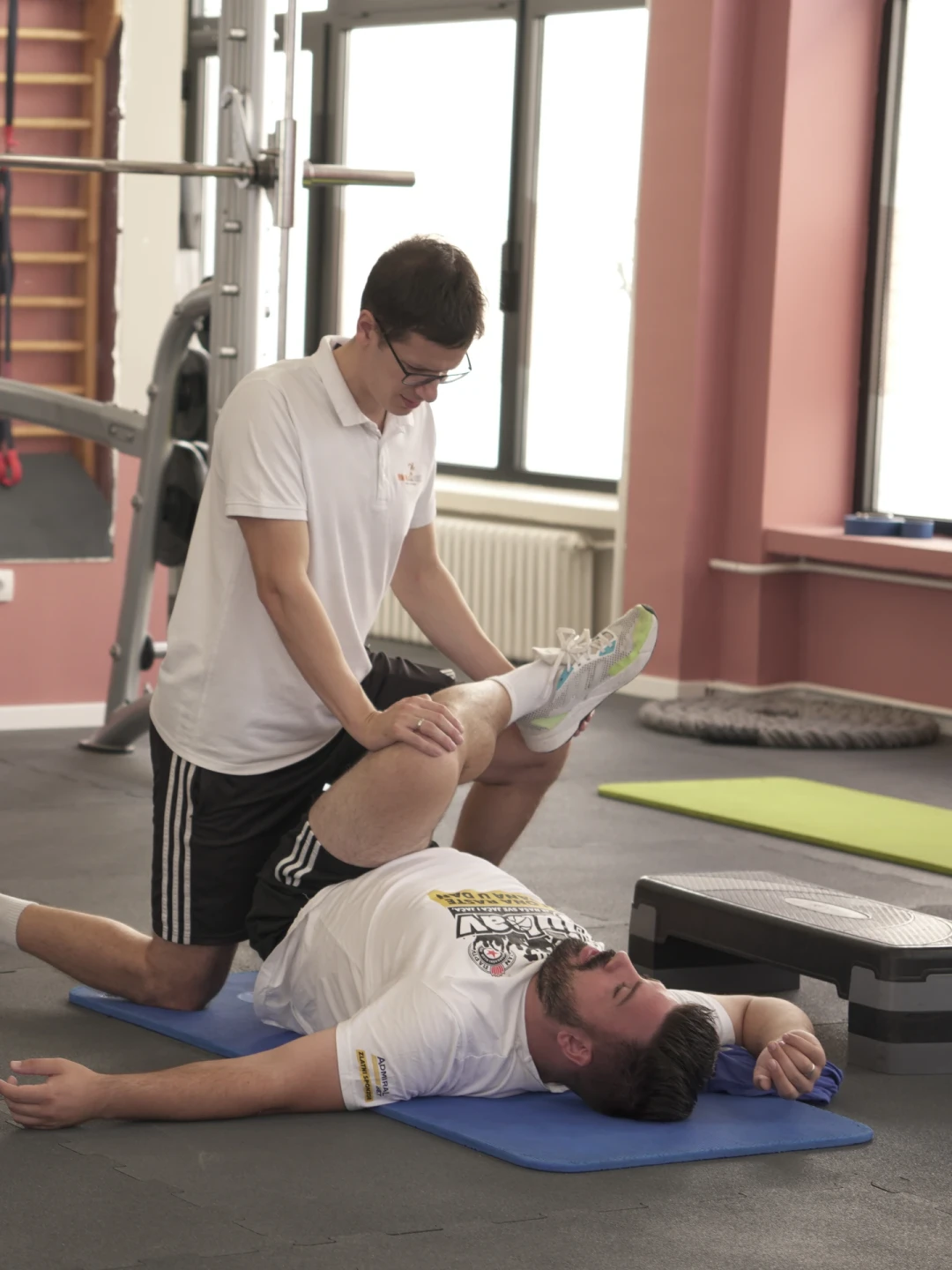
A client lies on a mat while a coach kneels beside him and guides his leg into hip flexion, supporting the knee and the foot.

Pain that gets in the way of everyday life

Herniated disc · after a fracture · chondromalacia patellae · tendon inflammation

The work aims to reduce pain and restore function, through controlled loading and a gradual return of the movements you need in everyday life and in sport.

Where a condition has been treated by a doctor, we start once the treatment is finished and with the doctor’s approval.

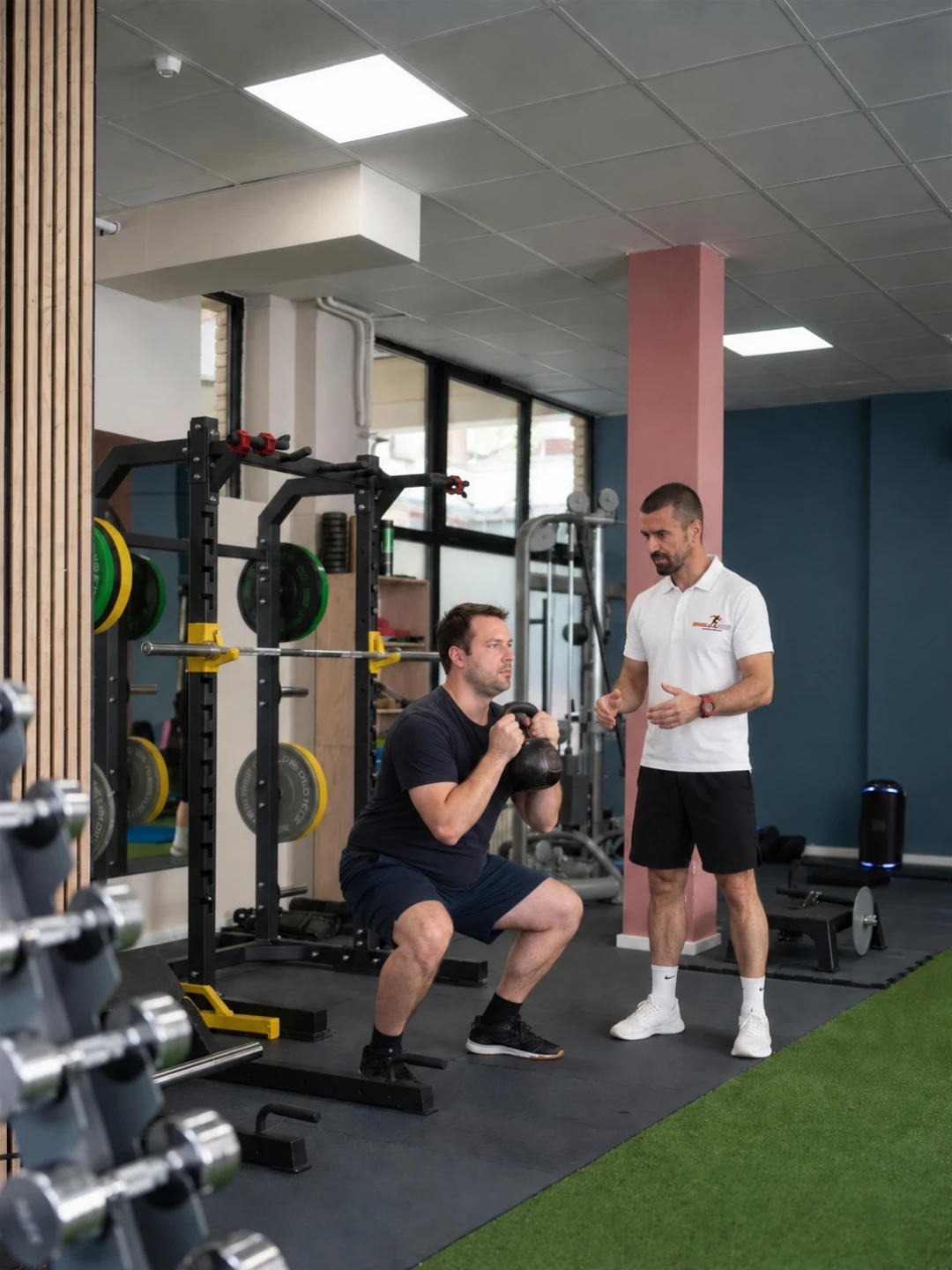
A recreational athlete does a goblet squat with a kettlebell held in front of his chest, standing tall, while a coach stands beside him and explains the movement.

Getting fit

No competitive goal · body composition · strength and fitness

If you have no competitive goal, we work on body composition, strength and fitness, with a plan you can keep up alongside work and family.

The pace is set by your current level and by how many times a week you can realistically come in.

A half marathon preparation plan

This is what a real preparation plan from the centre looks like. Seven weeks to a half marathon, with the goal of finishing in under two hours, built around work and one business trip.

weeks of preparation
7
of running in total
256 km
running sessions
28
the goal, under two hours
2 h
Weekly running volume
  1. 36.9kmWeek1Start of race-specific work
  2. 43.0kmWeek2Volume and intensity rise
  3. 36.7kmWeek3Volume held steady
  4. 46.0kmWeek4Peak of the cycle, dress rehearsal
  5. 24.7kmWeek5Business trip, lighter week
  6. 37.0kmWeek6Race-specific block
  7. 32.1kmWeek7Taper and race
Volume rises in waves

A harder week is followed by an easier one, so the body has time to absorb the load. The long run grows from 13 to 19 km.

The peak comes three weeks before the race

Week four holds a 19 km dress rehearsal, at the same time of day and in the same kit as on race day. After it the volume drops, so the runner reaches the start rested.

The plan follows your schedule

Week five is a business trip, so the volume comes down to 24.7 km and the gym sessions are replaced with exercises that need no equipment.

Gym work runs alongside the running

Every week includes isometrics, balance, single-leg strength and plyometrics. Before the race the gym volume comes down step by step.

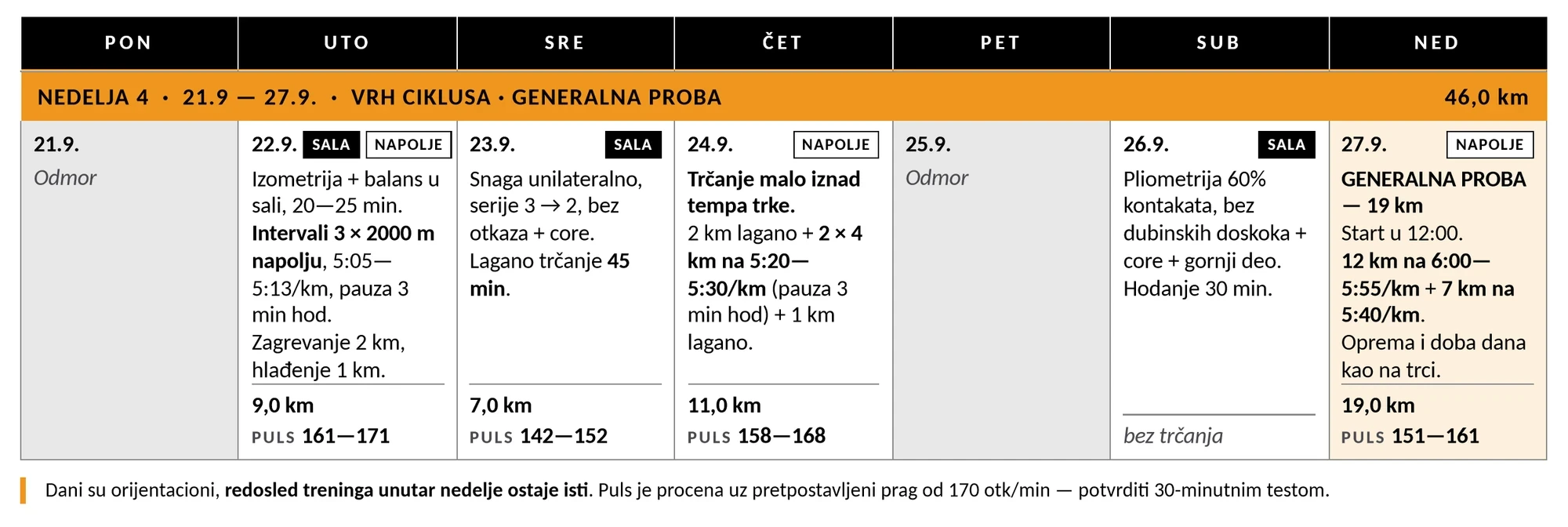
Excerpt from the half marathon preparation plan, week four. Day by day it lists intervals, strength work, running just above race pace, plyometrics and a 19 km dress rehearsal, with the distance and heart rate range for each session.

Testing is the same for everyone

A weekend runner and a player in mid-season go through the same battery of tests, from body composition on the InBody 770 and muscle response on TMG to the jump on Optojump, posture on Contemplas and foot loading on Currex. Only the plan that comes out of those numbers is different.

What the test involves
First appointmentMeasurement

You start with a battery of tests, so that we can see where you are starting from and which limitation needs to be dealt with first.

After the reportA plan built on the results

Those results and your goal shape a programme you can keep up alongside work and other commitments.

Every three monthsRetest

The testing is repeated, so you see your progress in numbers, and the programme is adjusted to what the measurements show.

What clients write on Google

4.9
26 ratings on GoogleAll reviews on Google

Very professional and dedicated staff!

Marija BasaraGoogle review

It starts with measurement

The first step is the same whatever your goal. The appointment lasts60 minutes, and afterwards we know where you are starting from and what to work on first.