Skip to content

Recovery and rehabilitation

Recovery at the centre in New Belgrade has two sides. The first is recovery for healthy athletes between matches and hard training sessions. The second is work with athletes who have an injury and need to return to play.

Both take place in the gym, with the equipment and under a coach’s supervision.

Recovery after a match

After a match, an athlete has limited time before the next training session. The aim is to reduce muscle pain, speed up circulation and help the athlete get back sooner to a state in which they can train at full strength.

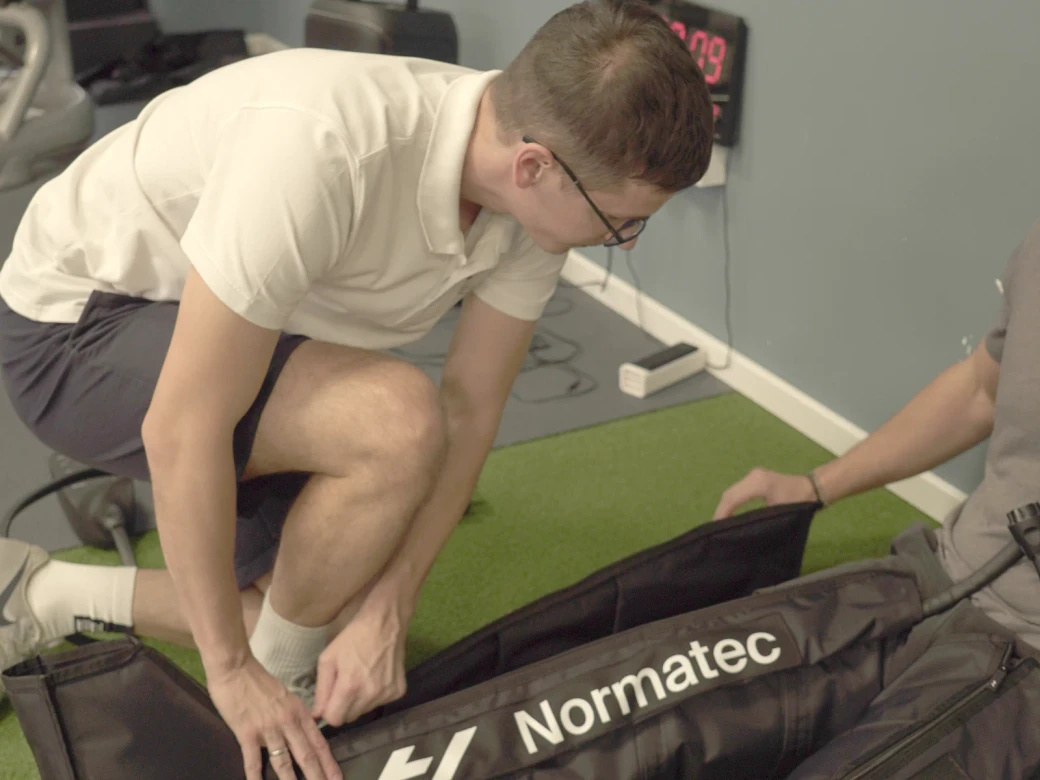
A coach at Advance Fitness Centar fits Normatec compression boots on an athlete’s legs before a recovery session.

Normatec compression boots

Whole limb

A sequential compression system that works chamber by chamber, from the foot up towards the hip, pushing fluid out of the legs. The hip attachment covers the groin, the glutes and the upper thigh, the area that takes the most strain in sports with sprinting and changes of direction.

After a match and after a hard leg session, while the athlete sits or lies down. The intensity is set according to how sensitive the athlete is on the day.
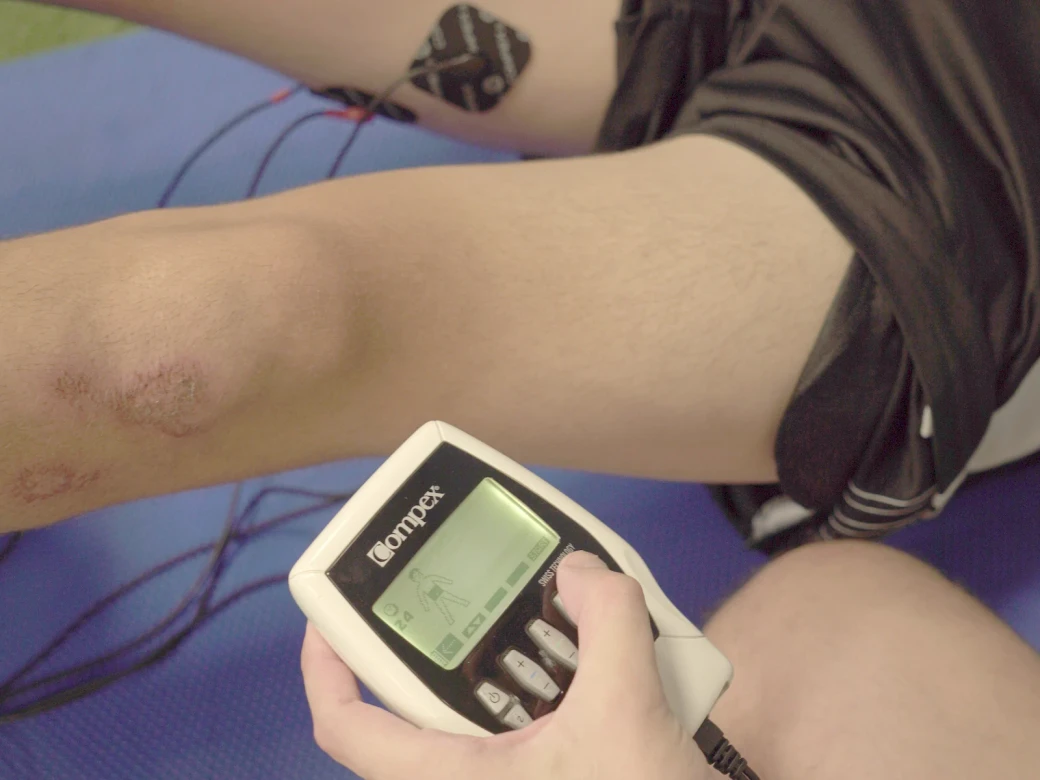
A coach adjusts the Compex electrical muscle stimulation unit, with the electrodes placed on the thigh of an athlete lying on a mat.

Compex

Muscle group

An electrical muscle stimulation device. Electrodes are placed on a muscle group, and the device produces contractions the athlete does not have to generate on their own.

Recovery programmes work on circulation and on reducing the feeling of heavy legs after a match. Activation programmes are used before training, or in the phase when a muscle is working poorly after an injury. It is also useful when the athlete is too tired or too sore for any further movement.

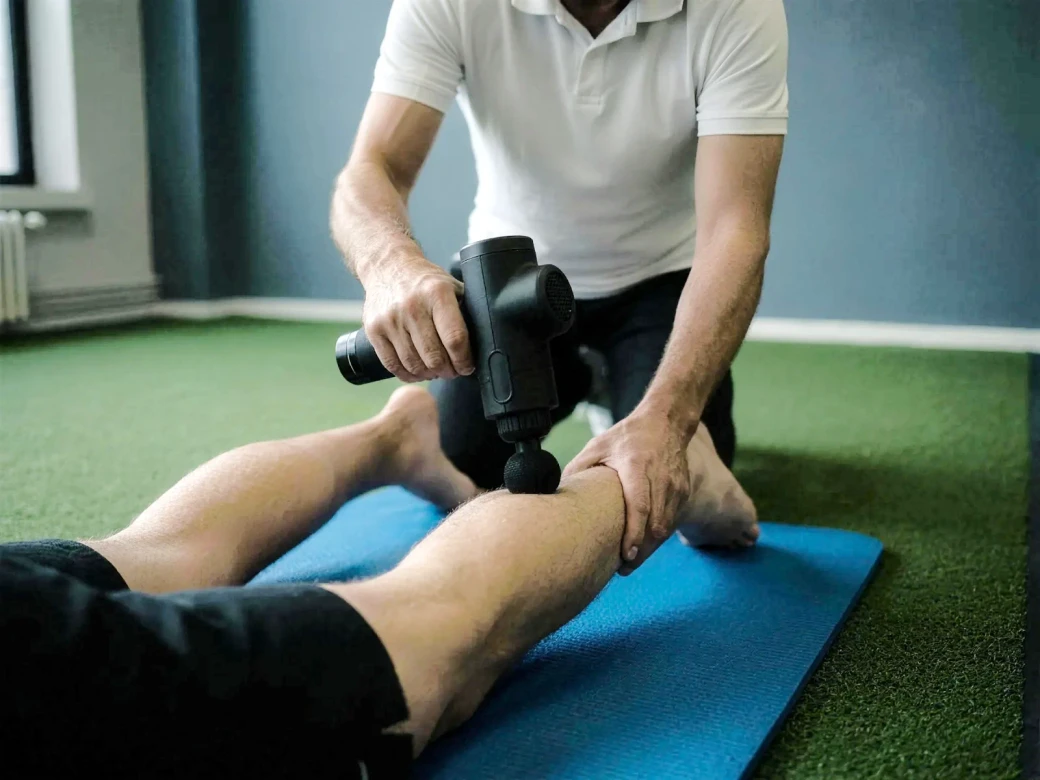
A coach works with a massage gun on the calf of an athlete lying on a mat.

Massage gun

Single area

Percussive massage for working on one muscle group. It is applied to the specific spots where the athlete feels tightness, and only briefly on each area.

Before training to prepare the muscles, after training to reduce the feeling of stiffness. It is never used over a fresh injury, swelling or painful tendons.

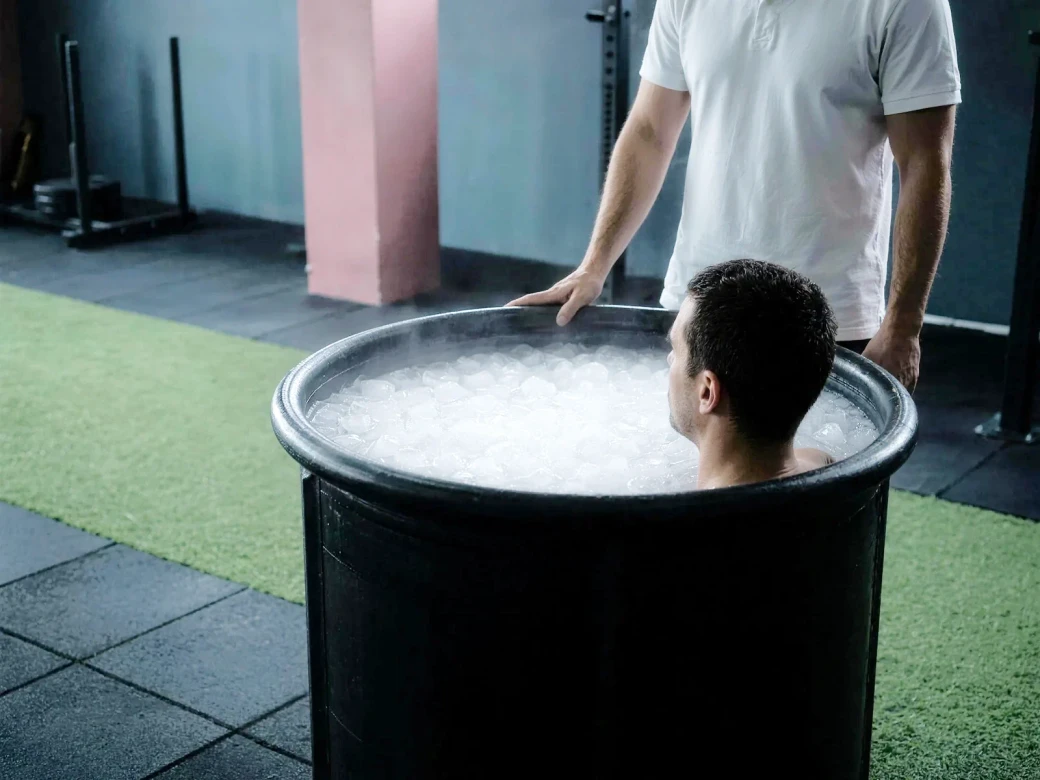
An athlete sits in an ice barrel up to the shoulders, while a coach stands beside it with a hand on the rim.

Ice barrel

Whole body

Immersion in cold water after a match or a hard training session. The cold reduces the sensation of pain in the muscles.

When the athlete has another match or training session soon after. Time and temperature are dosed, because the aim is recovery, not endurance in the cold.

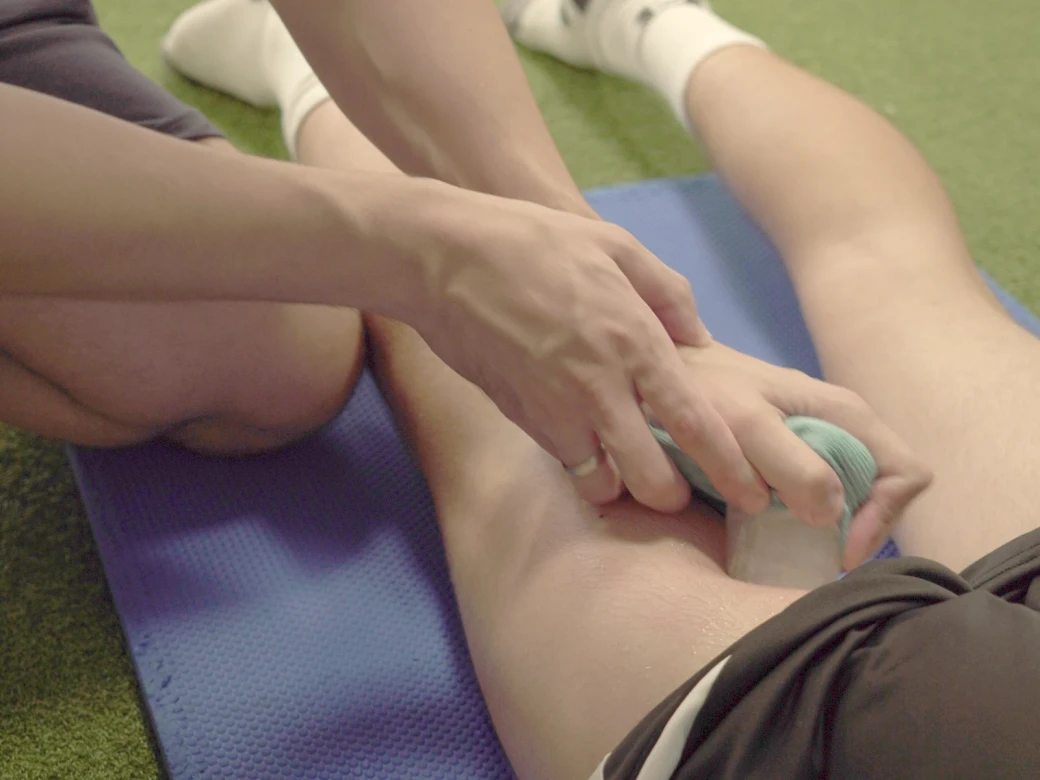
A coach applies cryo massage to the thigh of an athlete lying on a mat, cooling one area only.

Cryo massage

Single area

Local cooling of a limited area, unlike the barrel, which cools the whole body. It is used in short intervals where there is fresh pain, swelling or a sensitive tendon.

Most often after a match, on the knee, the calf or the ankle. It is combined with the rest of the recovery work, depending on what the athlete did in that day’s match.

When we hold back on recovery work

Not over a fresh injury

The massage gun is never used over a fresh injury, swelling or painful tendons.

The cold is dosed

Time and temperature in the barrel are set in advance, because the aim is recovery, not endurance in the cold.

Always supervised

The athlete goes in under a coach’s supervision and comes out as soon as any discomfort appears. Nobody uses the equipment on their own.

After the doctor, not in place of one

With injuries that have been treated medically, we work in agreement with the doctor and the physiotherapist who lead the case.

Sports injury rehabilitation

Through targeted training we work on reducing pain and restoring function. The programme is built around which structure is under strain, which movement provokes the pain and which sport the athlete is returning to.

The overuse and less serious injuries we see most often

Knee

Osgood-Schlatter

Pain on the bony bump of the shinbone just below the kneecap, during growth spurts.

Jumping · landing · sprinting
Patellar tendinitis

Pain at the lower tip of the kneecap, also known as jumper’s knee.

Repeated jumping · sudden stops

Groin, thigh and hip

Adductor tendinitis

Pain in the groin, common in football.

Changes of direction · shooting · sprinting
Hamstring overload

Pain and tightness in the back of the thigh.

Sprinting · high running volume
Pubalgia

Pain in the middle of the groin that spreads towards the abdomen and the thigh.

Shooting · changes of direction · sprinting

Foot and lower leg

Achilles tendinitis

Pain and stiffness in the tendon above the heel.

Worst in the morning and at the start of training
Ankle sprain

The foot rolls over and the ligaments on the outside of the ankle are overstretched.

The injury that recurs most often

Shoulder and elbow

Tennis elbow

Pain on the outer side of the elbow.

Gripping · lifting loads · racket sports
Painful arc in the shoulder

Pain when raising the arm above the head, known as shoulder impingement.

Throwing · serving · swimming

Injuries with a longer road back

This part of the work comes after medical treatment, in agreement with the doctor and the physiotherapist who lead the case.

Hamstring tear

A tear in the hamstring muscle fibres, most often at full sprint or during a long stride.

Anterior cruciate ligament (ACL)

One of the most serious knee injuries, with a long road back and a high risk of re-injury if stages are skipped.

Meniscus injury

Pain along the joint line, swelling and a feeling that the knee locks after twisting under load.

The injuries listed are examples of the ones we see most often. We also work with other injuries and conditions, and the assessment and programme are made for each athlete individually.

What clients write on Google

4.9
26 ratings on GoogleAll reviews on Google

An amazing place to train! The coaches are dedicated, and truly know what they’re doing. They pay attention to every move, adjust the workouts to your current condition, and always motivate you to push forward — but never beyond your limits. Thanks to their approach and attention to detail, they helped relieve my herniated disc pain and got me back in shape like I haven’t been in years! Highly recommended!

Anna MarcoGoogle review

It starts with measurement

For recovery and for a return after injury alike, we measure first, so that we know which side is lagging behind and how much load the body can take at the moment.